Crypto Has Won. Now Comes the Hard Bit.
Crypto is being absorbed into ordinary finance. That is a real victory, but it may make the next market cycle narrower, more selective, and less forgiving.

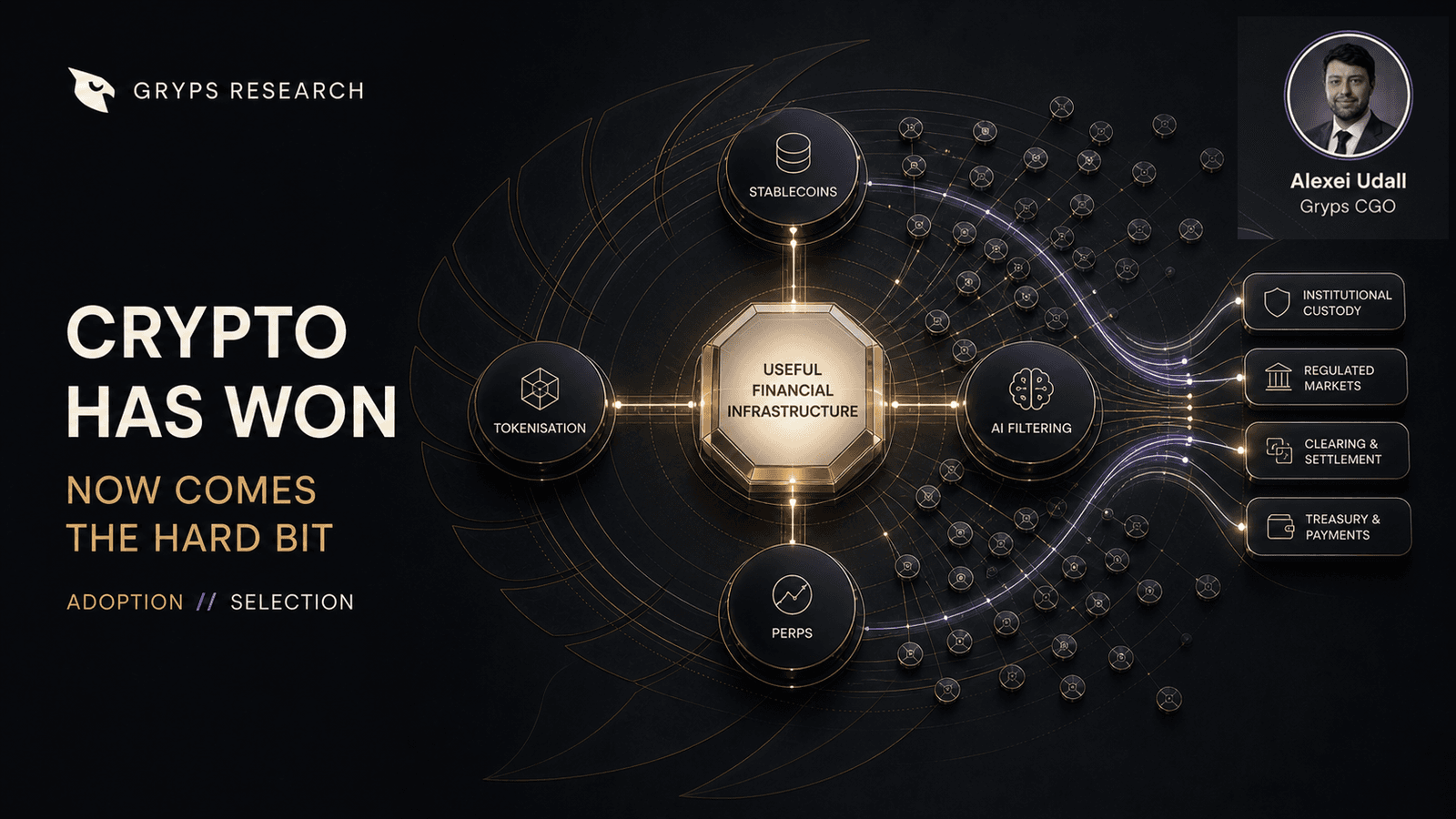
Crypto has won.
You would think that meant we could all break out the champagne. Sadly, it is not quite that simple.
The argument over whether blockchains have a place in finance is largely over. Bitcoin trades through regulated products. Stablecoins are moving into payment and settlement systems. Public companies, banks, asset managers, and large technology firms no longer treat the whole sector as a strange experiment.
There are a few identifiable events that brought us here. The US Securities and Exchange Commission approved spot bitcoin exchange-traded products in January 2024. In July 2025, the GENIUS Act became US law and created a federal framework for payment stablecoins. Those are not small changes.
But winning changes the trade. Once a technology becomes accepted, some of the speculative premium attached to proving that it should exist begins to disappear. Crypto starts to look less like a separate universe and more like a set of rails inside the technology and financial sectors.
That is the tension I think the market is underestimating. Crypto adoption can continue while the average crypto asset performs badly.
The news may be the exit
Markets have always bought the rumour and sold the news. Crypto may now be doing that on a twenty-year horizon.
The rumour was that money, assets, and financial agreements could move on open programmable networks. The news is that stablecoins work, tokenised assets are becoming ordinary, and large trading venues can operate on-chain at meaningful scale.
The unfortunate reality for token holders and teams launching new tokens is that infrastructure adoption does not automatically create demand for every token attached to it. The internet became essential. That did not make every dot-com share valuable. The infrastructure won, then the market had to work out which businesses deserved to survive. Crypto is moving into a similar phase.
The parts of crypto with the clearest PMF today are the least mystical, and arguably some of the least exciting: dollar settlement, custody, trading, risk management, tokenisation, and the software that connects them.
Though saying that, it is hard not to be excited about the tokenisation of stocks. I wrote more about why 24/7 equity exposure is beginning to wake up.
Stablecoins and perps are prominent because the demand already exists. People want digital dollars, and traders want derivatives. We do not need to invent a new reason for either product to matter.
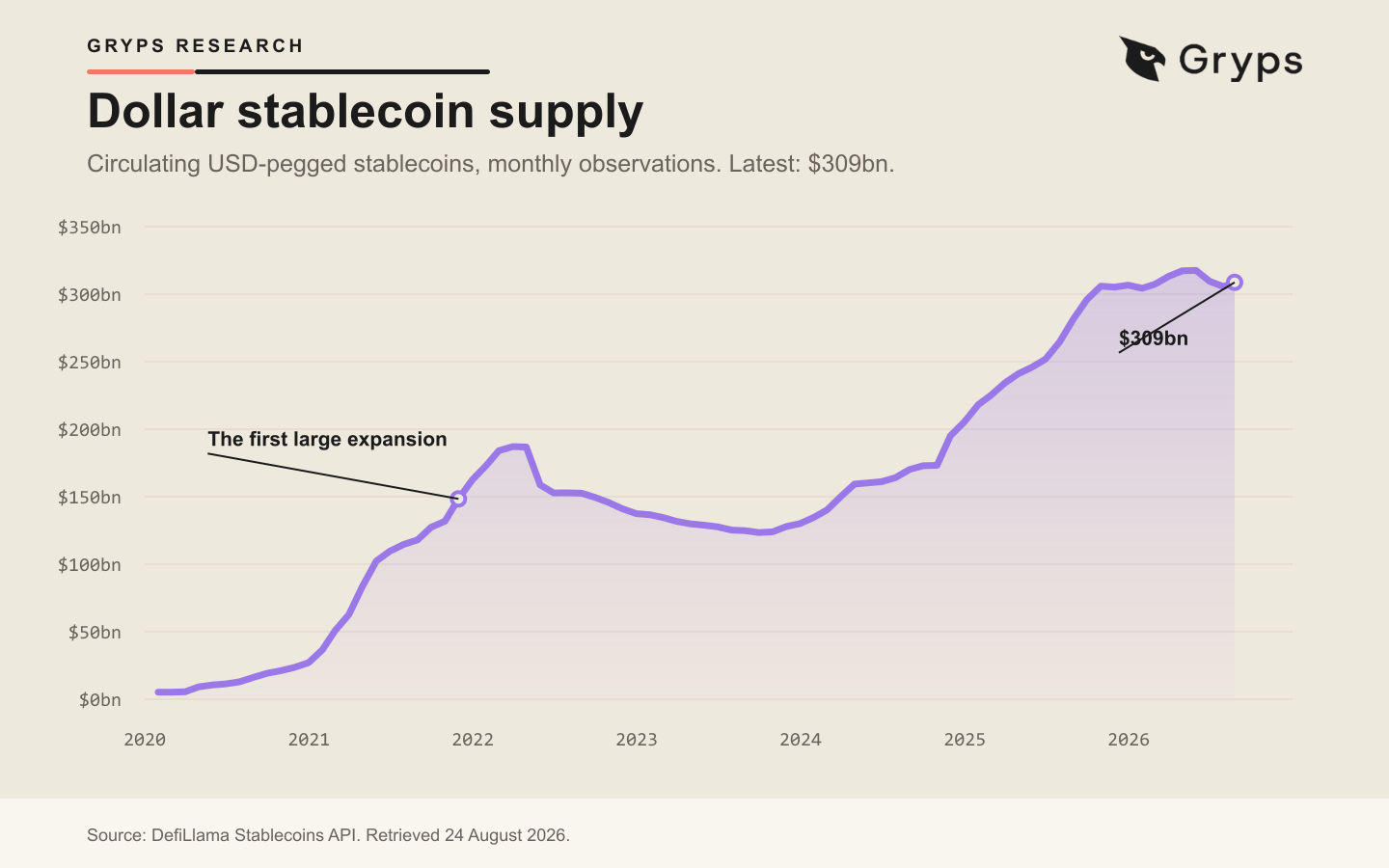
Visa's on-chain analytics work offers a useful reality check. Its dashboard reports $15.4 trillion of adjusted stablecoin transaction volume over the previous twelve months, alongside an average supply of $269.3 billion. The methodology matters because raw on-chain transfer volume contains activity that should not be treated as ordinary payments.
This is what winning often looks like. The product becomes useful, the plumbing improves, and the technology slowly disappears into the thing people were trying to do in the first place.
There are too many tokens and too little attention
At the same time, token creation has become almost frictionless. Pump.fun makes the scale of the problem difficult to ignore.
CoinGecko counted 5.3 million tokens deployed on Pump.fun in 2024. Its daily chart shows the busiest days pushing close to 70,000 launches. That is tens of thousands of new tokens competing for attention in a single day.
Its June 2026 follow-up examined 18.67 million Pump.fun tokens with trading activity. Nearly seven in ten recorded their last trade on the same day they launched. Most of this new supply disappears almost as quickly as it arrives.
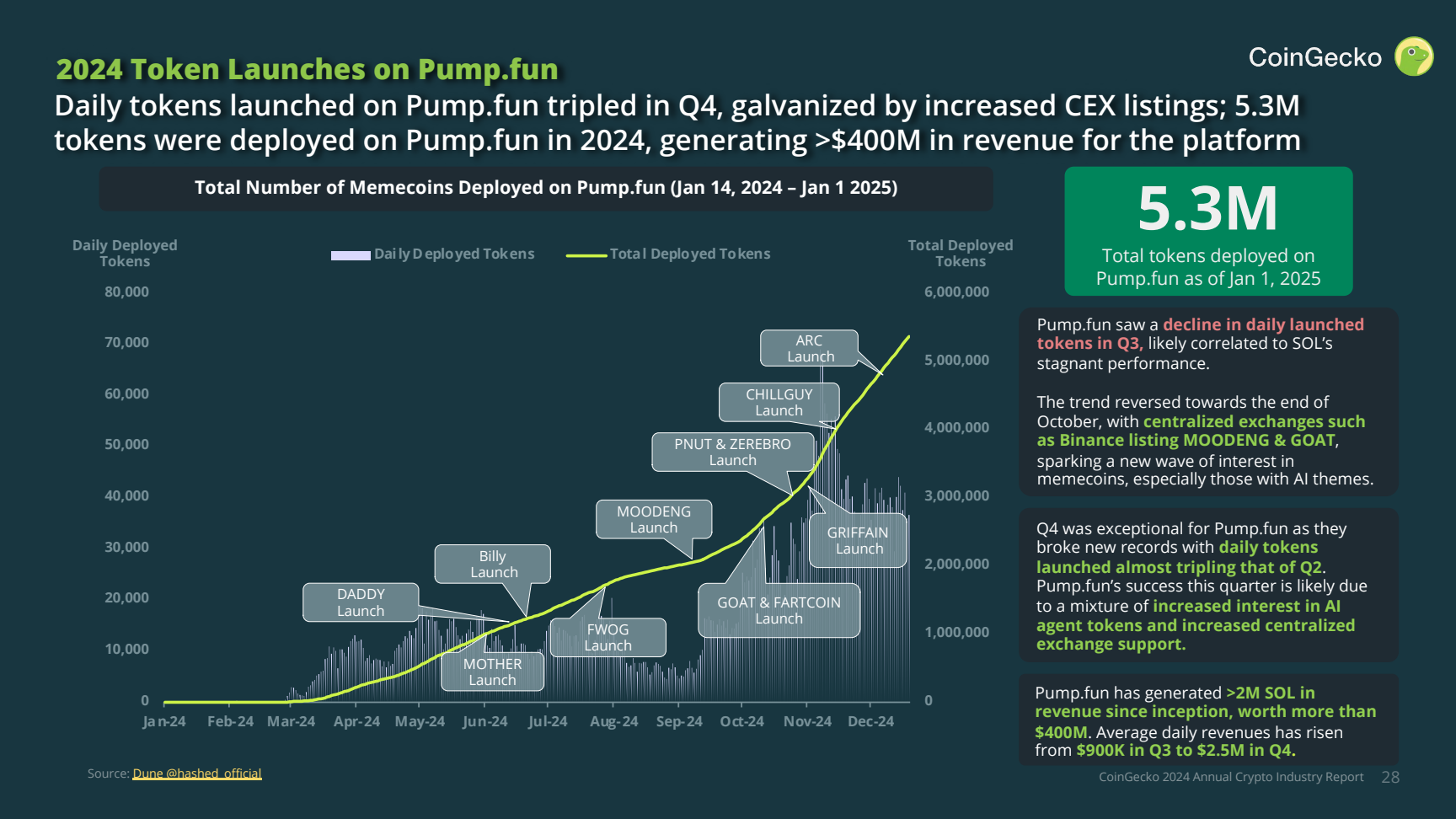
This makes the problem easier to understand. Thousands of new tokens can appear while you are asleep. The list of assets anyone can reasonably research is already crowded. The list of tokens they can technically discover is almost unmanageable.
Supply has exploded. Human attention has not.
That weakens the old altcoin cycle. Capital no longer rotates through a small selection of assets. It is divided across a growing array of subsectors: layer ones, layer twos, stablecoins, DeFi protocols, perps venues, AI tokens, memes, tokenised real-world assets, app tokens, points programmes, and thousands of projects launched because launching is now so cheap.
The sensible response is not to accept the status quo, but to raise our expectations of what a quality token should look like.
A token needs a reason to exist, a credible path for value to reach it, controlled emissions, useful distribution, a product people use without being bribed every week and, most importantly, a team and early investors who are genuinely happy for retail holders to share in the upside. Most will fail one of those tests. Quite a few will fail all of them.
AI can help with the filtering, but it cannot supply judgement
AI is a natural answer to the information problem. No person can read every governance proposal, unlock schedule, contract change, treasury movement, audit, funding rate, and market update across millions of assets.
An agent can watch those things continuously. It can map token supply, flag abnormal flows, compare fee generation with incentives, trace dependencies, and tell you when a project's public story has drifted away from what is happening on-chain.
That still leaves the important work. Data can show that fees are rising. Judgement decides whether the fees are durable, whether users are real, whether the token captures any value, and whether the risk is worth taking.
Capital is also voting with its feet. EY recorded $87 billion of generative-AI venture investment in the first eleven months of 2025, even as deal volume fell by 35%. Money concentrated in fewer, later-stage companies with visible adoption.
Crypto venture capital is not dead. Galaxy Research counted $20 billion across 1,660 deals in 2025, the strongest year since 2022. Q1 2026 then cooled to roughly $4 billion across 355 deals. The market is funding companies, but it is no longer funding every story at the same speed.
There is another detail in the Galaxy numbers. Trading, exchanges, investing, and lending attracted roughly $2.6 billion in Q1 2026, close to three-fifths of all crypto venture capital that quarter. The money is clustering around businesses with an obvious economic engine.
Perps DEXs are becoming real businesses
Perpetuals are a good example of the market growing up. Traders understand the product. Venues can charge for execution. Market makers can price risk. Better products win through liquidity, reliability, distribution, and the quality of the trade rather than through a white paper alone.
Hyperliquid has positioned itself well because the product and the token are connected in a way the market can inspect. The foundation says there were no private investors and no paid market makers. HYPE secures the network, pays network costs, supports fee discounts, and sits inside an automated mechanism that uses protocol fees to buy the token.
Hyperliquid's current fee documentation says fees are directed to the community, including HLP, deployers, and the Assistance Fund. HYPE acquired by the Assistance Fund is burned. That is a cleaner loop than issuing a token first and searching for utility later.
Good tokenomics do not remove business risk. Buybacks depend on trading activity. Trading activity is cyclical. Competitors can improve. Regulation can change the available market. But the model gives an investor something concrete to analyse: product usage, fees, token demand, supply, and the rules connecting them.
That should be normal. In crypto, it still feels unusually disciplined.
Where Gryps fits
The next phase of perps will be multi-venue. No single interface, order book or liquidity pool will serve every kind of flow equally well.
Public order books are excellent for continuous trading and visible price discovery. They are less suited to a large or information-sensitive order that does not want to advertise itself before execution. That flow needs a different route.
Gryps is building around private intent-based RFQ. A trader submits what they want to do. Competing solvers return firm prices. The trader can compare an executable outcome before accepting it, with bilateral non-custodial settlement underneath. The solver can then hedge across external venues rather than depending on one isolated pool of liquidity.
This matters in a more selective market. A business cannot rely on the token cycle to hide weak execution. It needs a real customer, a real problem, and a way to earn revenue by solving it.
This becomes more important as the market spreads across centralised exchanges, on-chain order books, AMMs, RFQ systems and new tokenised markets. Tokenised stocks add another set of assets, trading hours and liquidity sources to coordinate. The future is unlikely to belong to one universal venue. It is more likely to belong to systems that can find the right venue and the best executable outcome for each trade.
We are also looking closely at AI agents as participants on Gryps. That does not need to mean handing an agent unlimited control of an account. An agent can monitor prices, funding and liquidity across venues, prepare an intent, compare firm quotes, and bring a person in when the decision falls outside its limits. Solver-side agents can do the same work when they price and hedge risk.
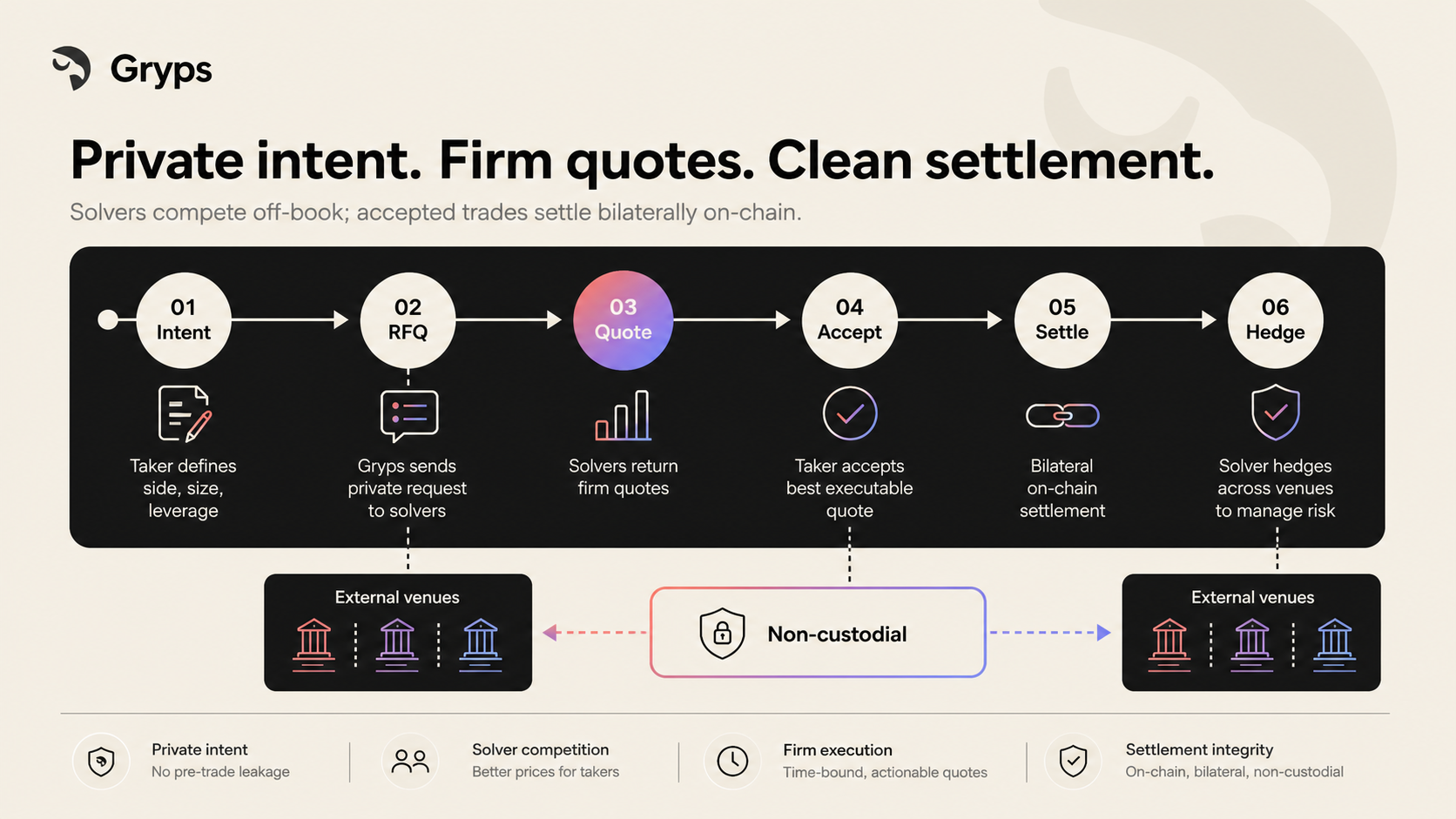
For Gryps, the problem is clear: private execution for size-sensitive perpetual flow across a market that is becoming more fragmented and more automated. That is a quieter story than another universal DEX. I think it is a better business.
Will there be another alt season?
Probably, in some form. I am less convinced it will look like 2021.
That cycle had an unusual backdrop. The Federal Reserve balance sheet expanded from roughly $4.2 trillion at the start of 2020 to $7.2 trillion by June, then continued towards $9 trillion. Fiscal support, lockdown behaviour, cheap capital, and a population living online all arrived at once. Crypto was one of several places that excess risk appetite found a home.
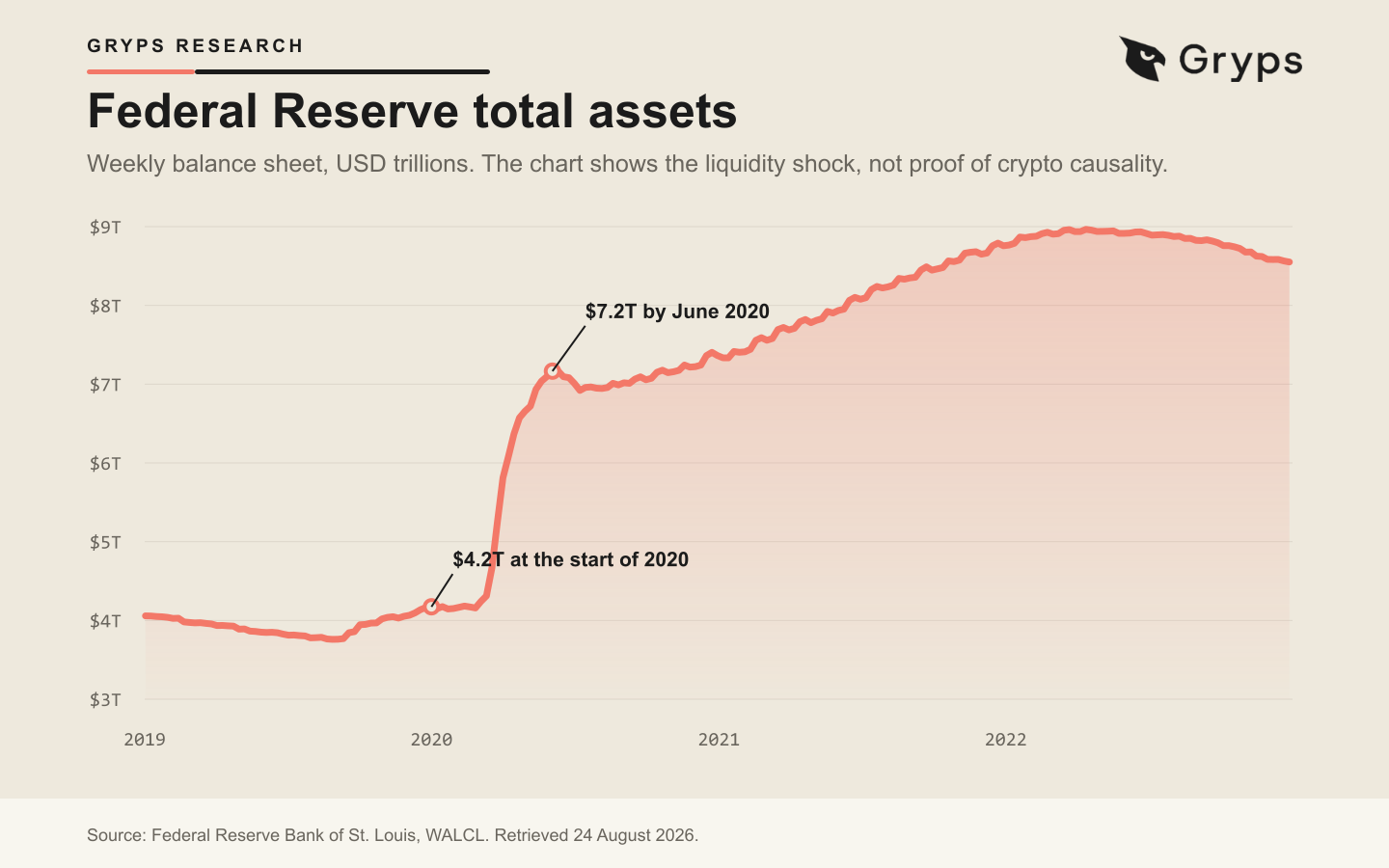
The Federal Reserve's own review puts the move plainly: total assets rose from $4.2 trillion at the beginning of 2020 to $7.2 trillion by June. That was an extraordinary intervention.
A broad alt season needs broad marginal demand. In a market with far more tokens, that probably requires a larger catalyst than it once did.
One path is another major liquidity event: falling real rates, a weaker dollar, renewed balance-sheet expansion, or fiscal stimulus large enough to push investors out along the risk curve.
A second path is genuine earnings. Stablecoins, tokenised assets, trading venues, lending markets, and applications generate enough useful activity that capital returns for business reasons rather than because everything has started moving.
A third path is distribution. Clearer rules, better custody, exchange-traded products, wallet improvements, and embedded stablecoin payments make it easier for new capital to enter. The GENIUS Act and crypto ETPs matter here, but distribution is more likely to favour a smaller set of assets than lift the whole market.
A fourth path is supply discipline. Failed projects disappear, emissions fall, treasuries stop treating the token as an endless source of working capital, and investors become much less willing to pay for vague future utility.
The likely outcome is some blend of these, weighted by case. A few sectors can run very hard. A few businesses can become extremely valuable. That is different from assuming the entire long tail gets another turn.
The next cycle may reward less excitement
If crypto has won, the next question is not whether the technology survives. It is where value sits once the technology becomes ordinary.
I would look for five things: people using the product without constant incentives, revenue that survives quieter markets, token supply that does not overwhelm demand, a clear link between the business and the asset, and a reason this system should exist on-chain in the first place.
AI will make that filtering faster. It will not make weak businesses strong.
The speculative part of crypto is not going away. Markets remain markets. But the centre of gravity is moving from proving that blockchains matter to proving that a particular product deserves capital.
That is less exciting than buying everything with a ticker. It is also what a functioning market is meant to do.
Sources and methodology
Stablecoin supply uses daily DefiLlama observations for USD-pegged assets, reduced to monthly points for readability. The latest observation is 25 August 2026. Federal Reserve total assets use the weekly WALCL series from FRED. The liquidity chart is contextual and should not be read as a claim that balance-sheet expansion alone caused crypto prices to rise. Third-party research charts retain their original design and visible attribution.
SEC statement on spot bitcoin ETP approval.
Visa Onchain Analytics dashboard.
CoinGecko 2026 Spot CEX Report.
CoinGecko 2024 Pump.fun token-launch chart.
CoinGecko Pump.fun token-lifespan analysis.
Galaxy Research Q1 2026 crypto venture report.
Hyperliquid fee documentation.
This article is market commentary, not investment advice. Perpetual derivatives involve leverage, funding, liquidity, and liquidation risk.